
 Green Water Technology Co.,Ltd
Home
Library
Technical Literature
Complete Analysis Of Jet Aerator
Complete Analysis Of Jet Aerator
When many people first hear the term "jet aerator," their immediate reaction is often: how is it different from ordinary aerators? You can think of it as an aeration method that excels at "air intake, mixing, stirring, and oxygen transfer." It doesn't simply pump air into the water; instead, it uses a high-speed water flow to draw in air, pure oxygen, and even ozone, and then, through jetting and circulation, allows the gas to more fully enter the water body. To put it more bluntly, the real strength of a jet aerator lies not only in its ability to aerate, but also in its ability to perform air intake, mixing, circulation, and mass transfer all at once.
I. How Does a Jet Aerator Work?
If we break down its working process, it can be basically divided into two steps.
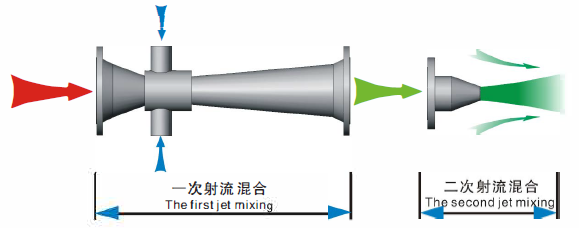
The first step is to spray the water quickly.
Under the action of the pump, the water is ejected at high speed through the nozzle, converting
pressure energy into velocity energy. At this time, a negative pressure zone is formed inside the ejector. Air or oxygen is "drawn" in by this negative pressure and then mixes with the high-speed liquid flow inside the ejector
to form finer and more uniform bubbles.
The second step is to send the mixed water and air to the bottom of the pool and then spray it out.
At this point, the jet not only propels itself forward, but also carries more surrounding water, creating a significant circulation,
mixing, and entrainment effect. This allows for more thorough contact between oxygen and the wastewater and sludge, resulting in higher oxygen transfer efficiency.
Therefore, the core logic of jet aerators is not "bubbling,"
but rather "high-speed ejection + forced mixing + secondary injection + circulating mass transfer." This is also the biggest difference between it and many traditional aeration methods.
Structure diagram:
II. Why is it more attractive than traditional aeration?
a. Higher Oxygen Transfer Efficiency
The finer and more evenly distributed the bubbles, the easier it is for oxygen to enter the water.
Existing data indicates that self-priming and pressurized jet aeration systems can achieve
oxygen utilization rates of 30% to 45% under suitable operating conditions; pure oxygen jet aeration achieves even higher rates, exceeding 90%; and in ozone application tests, ozone utilization rates can even reach over 99%.
This
is crucial for wastewater treatment projects. Higher oxygen supply efficiency allows for smoother system operation and more stable treatment results.
b. Not just aeration, but also mixing and circulation.
Many problems in wastewater treatment plants are not just insufficient oxygen, but also uneven mixing, dead zones, and poor sludge suspension.
Jet aerators, because of their
significant jetting and entrainment capabilities, can often perform mixing, circulation, and aeration all at once. This capability is very practical for tank types such as oxidation ditches, plug flow tanks, mixing tanks, and oxidation
ponds.
c. The system is relatively simple and more flexible in modification.
Taking the GWQ/B jet aerator in the documentation as an example, the system mainly consists of a water pump, a Venturi jet aerator, enhancement nozzles, and necessary piping, with a relatively compact overall structure.
For blower-pressurized solutions, it can also be upgraded by combining it with the existing blower or compressor system. In other words, many projects do not require a complete overhaul of the entire system; instead, performance
can be improved based on the existing foundation.
d. Easier Maintenance
Traditional aeration heads are prone to clogging, aging, and cracking after prolonged use, often requiring water outages and drainage for repairs.
Existing data repeatedly mentions that jet aeration systems
are more suitable for retrofitting without water outages or drainage, with maintenance focusing more on equipment such as pumps. This is particularly significant for many older wastewater treatment plants, as it directly impacts
the difficulty of repairs, downtime, and operating costs.
e. Lower noise and more adaptable to changing operating conditions.
The information states that, under certain installation methods, jet aeration systems have relatively low noise levels, with some even approaching silence. Furthermore,
it can switch between air, fan air source, or pure oxygen source according to load changes, and can also adapt to different operating conditions through frequency conversion regulation. Therefore, the system is usually more adaptable
when facing fluctuations in water volume and quality.
f. There are also some additional benefits to the process operation.
The data on pure oxygen jet aeration also mentions that this type of system can reduce foam and odor, improve sludge settling properties, reduce the risk of
sludge bulking, and help improve the treatment capacity of existing wastewater treatment plants.
These additional advantages are even more pronounced in scenarios with higher requirements, such as high-concentration wastewater,
ozone exhaust gas reuse, and pure oxygen aeration.
III. Where are jet aerators generally used?
Based on the information gathered this time, jet aerators have a wide range of applications, not just traditional sewage tank aeration.
1. Municipal sewage and industrial wastewater treatment: This is the most common and core application
area.
Existing case studies and data cover a wide range of wastewater types, including domestic sewage, pharmaceutical wastewater, landfill leachate, dyeing and printing wastewater, food processing wastewater, papermaking wastewater,
coking wastewater, alcohol wastewater, and chemical wastewater. Any project requiring improved oxygen supply efficiency, enhanced mixing within the treatment tank, and reduced downtime for retrofitting is well worth considering.
2. Pure oxygen aeration and high-load enhanced treatment
If the project itself has a high load, tight treatment targets, and limited pool capacity, then pure oxygen jet aeration will be particularly valuable.
It can inject
pure oxygen into the water more efficiently, making it suitable for upgrading, expansion, and high-concentration organic wastewater treatment.
3. Ozone dosing and ozone exhaust gas reuse
This document contains a great deal of information related to ozone, including design guidelines and numerous engineering achievements.
This indicates that jet injectors already
have a relatively mature application foundation in scenarios such as ozone dosing, ozone exhaust gas reuse, and enhanced oxidation. This type of capability is very attractive for advanced treatment projects.
4. River reoxygenation, iron and manganese removal, and water supply pretreatment
Besides wastewater treatment plants, jet injectors can also be used for reoxygenation of rivers and lakes, removal of iron and manganese from groundwater,
and oxygenation of water supply systems.
Because its essence is to enhance gas-liquid mixing and mass transfer, it can be used as long as there is a need in the scenario to "deliver gas into liquid more efficiently".
5. Air flotation, chemical dosing, vacuuming, and industrial mixing
Although these are not all "aeration" in the strict sense, the underlying logic is the same: they all utilize the ejector's ability to induce and mix air.Its
engineering achievements also show that it has been used in industrial applications such as air flotation aeration, liquid-gas jet vacuum pumps, reagent dosing, tank circulation mixing, and powder and gas transportation. In other
words, it is essentially not just an aeration device, but more like a fluid mixing platform.
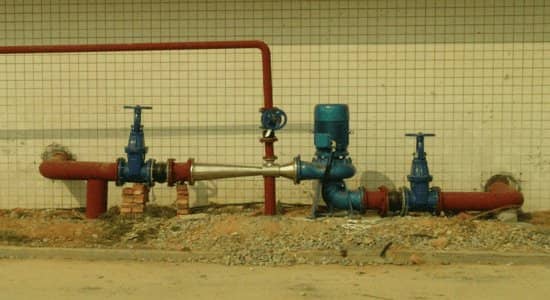
Engineering drawings:
IV. How to understand its true engineering value
From an engineering perspective, the true value of jet aerators lies not just in having a higher performance on a single parameter, but in their ability to integrate previously separate functions such as oxygen supply, mixing, circulation, and agitation into a single fluid system. The benefits of this are straightforward:
- 1. More compact system
- 2. More flexible modification ideas
- 3. Easier to balance mixing and oxygen transfer
- 4. Relatively less operational and maintenance pressure
Especially for older wastewater treatment plants, if the original aeration heads have deteriorated, the air volume is insufficient, and the oxygen supply in the tank is uneven, then jet aeration is often not as simple as "replacing the equipment", but rather a route to improve efficiency and upgrade.
V. Summary
In short, jet aerators are a highly efficient aeration technology based on Venturi jet injection and secondary jet-enhanced mass transfer. Its real advantage lies not only in rapid oxygenation but also in its ability to simultaneously complete air intake, mixing, circulation, and agitation. Therefore, it is highly adaptable to various scenarios, including municipal sewage, industrial wastewater, pure oxygen aeration, ozone dosing, and river reoxygenation. If a project faces requirements such as upgrading standards, expanding capacity, noise reduction, reduced maintenance, and improved oxygen utilization, then jet aerators are indeed a technology route worthy of serious evaluation.
VI. Contact Information
Company Website: https://www.cd-greenwater.com
Technical Contact Number: 028-85130135
Customer Service Contact Number: 18515915124
Contact Email: jane1984@cd-greenwater.com
Address: No. 191, Section 1, Changcheng Road,
Xihanggang, Shuangliu District, Chengdu
Contact Information
Company Website: https://www.cd-greenwater.com
Technical Contact Number: 028-85130135
Customer Service Contact Number: 18515915124
Contact Email: jane1984@cd-greenwater.com
Address: No. 191, Section 1, Changcheng Road,
Xihanggang, Shuangliu District, Chengdu